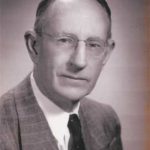
by Dr. Paul R. Gilchrist.
But things were changing in the presbytery and in the mission. Modernism had crept in. One of the missionaries was Irwen Paul, whom the mission did not want because of his liberal stance. He had a lot of followers in Chile before the mission transferred him to head up Union Theological Seminary in Buenos Aires. Not only so, but a Chilean ruling elder, Horacio Gonzales, who had a fairly large commercial enterprise was very influential in the presbytery. He had already published his modernist position in the mid 1930s. He and a couple of others manipulated the presbytery into reorganizing by forming several commissions of which he was a member. But the most powerful was the Coordinating Commission which had ultimate control of the presbytery.
Gilchrist, zealous for the evangelistic ministry, together with a number of pastors and leaders organized the Grupo for Accion Evangelica (GAE) independent of presbytery in 1939. Gonzales and others took them to task at a presbytery meeting in 1942. By January 1944 they were cited to close down GAE. At a special meeting of presbytery on May 18, 1944, Gilchrist and Pastor Olivero Maufras had their ministerial credentials suspended. This led to the formation of the National Presbyterian Church of Chile on July 2, 1944.

to be continued tomorrow . . .